What Size RV Cover Do I Need?
RV Covers: What Size Do I Need? (Simple Guide + Most Common Size & Cost)
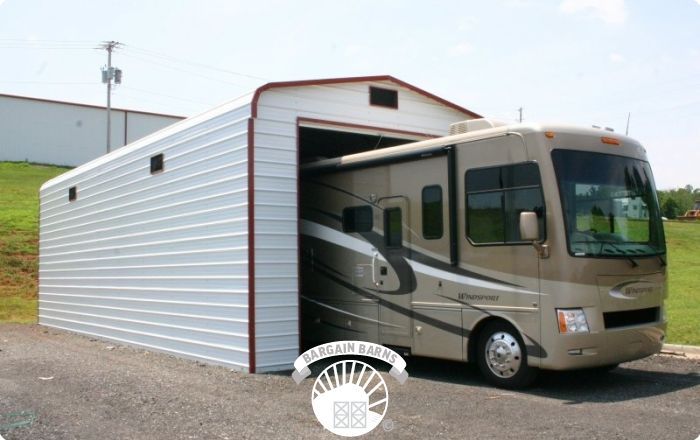
If you’re shopping for an RV cover (often called an RV carport), the #1 question is almost always: What size do I need? The good news is this is easier than most people think—because RVs are built to follow road limits, and those limits help us choose the right cover size with confidence.
Below is a straightforward way to pick the right width, height, and length, plus the most common size we build and what it typically costs.
Start With the Legal Road Limits (Width + Height)
Most RV owners overestimate how tall and wide their unit really is. But RVs that travel legally on U.S. highways are built around common restrictions:
- Maximum road width: 8'6"
- Maximum road height: 13'6"
That matters because if your RV can be legally pulled down the highway without a permit, we can design a cover that comfortably fits it.
What About Slide-Outs? (The Stationary “Real Life” Width)
When the RV is parked, the next question is:
How much space do I need to open my slide-outs under the cover?
Here’s the key detail:
- Even the largest slide-outs typically won’t extend more than 4 feet per side (and most are less).
- If you had huge slides on both sides, that’s up to 8 feet of added total width.
So, if your RV is 8'6" wide and you open slide-outs on both sides:
- 8'6" + 8' = 16'6" total maximum width with slides open
That’s why we almost never build smaller than 18 feet wide for RV covers—because it gives you comfortable breathing room for slide-outs, mirrors, awnings, and just moving around your rig.
Why 18' Wide Is the Sweet Spot
An 18' wide RV cover is the go-to because it balances:
- Slide-out clearance
- Ease of parking
- Room to walk around
- Future flexibility if you upgrade RVs later
In most cases, 18' wide means you’re covered (literally) even with slides extended.
How Tall Should My RV Cover Be?
We typically recommend a 12' leg height, because with a 3/12 roof pitch, it gives you about:
- 14'6" of clearance
That means anything you can legally pull down the highway without a permit will fit under a properly built 18' wide RV cover with a 12' leg height and a 3/12 pitch.
Length: Don’t Forget Your “Extras”
Length is where people most often come up short—because RV “length” doesn’t always include the extras.
When choosing length, think about:
- Rear ladder
- Spare tire
- Bike rack
- Trailer tongue (if applicable)
- A little extra space for easier parking
A simple rule of thumb:
Pick a cover length that’s at least a few feet longer than your RV’s total tip-to-tip length.
The Most Common RV Cover Size (and Typical Cost)
The most common RV cover size we build is: 18x35x12
And the average cost is around: $3,000 (base pricing)
Of course, pricing can vary depending on location, steel pricing, installation details, and the options you choose.
Popular Upgrades & Options to Consider
Many RV owners customize their cover based on weather, storage needs, and how they use the space. Common upgrades include:
- Enclosed sides (partial or full) for wind protection
- Enclosed ends for even more coverage
- Upgraded gauge thickness for heavier-duty strength
- Certified/engineered packages for higher wind/snow requirements
- Extra height for taller rigs or added comfort
- Additional length to cover a truck, golf cart, or storage area
If you’re in a high-wind or heavy-snow region, the right upgrades can make a big difference in long-term durability.
Quick Size Checklist Before You Order
Before finalizing your RV cover, gather these details:
- RV total length (tip-to-tip, including racks/ladders)
- RV overall height (including AC units)
- Slide-out count and which sides
- Any extras you want under the cover (truck parking, storage, etc.)
If you’re unsure, don’t guess—measure your actual unit. Most people are pleasantly surprised that their RV is smaller than they assumed, especially in height.
Bottom Line
If your RV is road-legal without special permits, a properly designed cover will fit it—and for most RV owners, 18' wide is the safest, most practical starting point, especially if you want slide-out clearance.
Most common build: 18x35x12
Typical base cost: around $3,000
Comfortable clearance: about 14'6" with a 12' leg + 3/12 pitch
Get the coverage you need—without guessing. Explore our most popular RV cover builds and upgrades.
Recent Posts